

The next generation of software engineering won't happen inside a chat
Code generation is abundant. Durable intent, responsibility, review, evidence, and release authority are not—and a chat cannot hold them together on its own.
Read articleSoftware · Systems · Consequence
Field notes on software architecture, AI agents, engineering judgment, and building systems that must survive production.
Latest writing
Code generation is abundant. Durable intent, responsibility, review, evidence, and release authority are not—and a chat cannot hold them together on its own.
Read article
A practical way to use coding agents as specification interviewers, expose consequential unknowns, and change bad decisions before they become code.
Read articleHow I replaced WordPress with static pages, a simple agent-assisted editorial workflow, and a few focused Cloudflare services.
Read article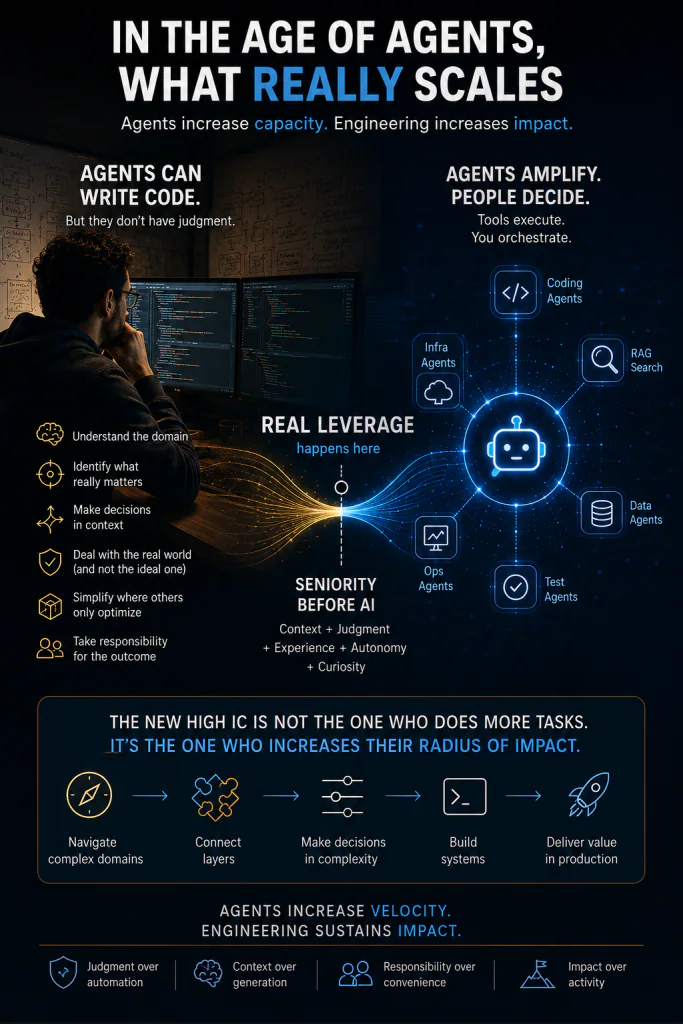
How senior individual contributors can use AI agents to expand execution capacity while retaining judgment, ownership, and system-level thinking.
Read article
A practical API design principle: replace methods that hide branching decisions with explicit operations that clarify intent, behavior, and tests.
Read article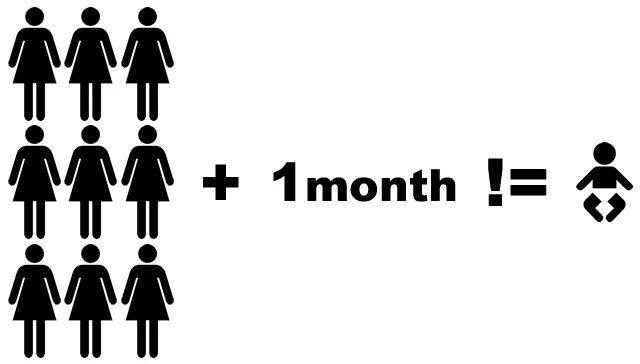
Why adding developers can delay complex software projects—and how small, focused teams reduce coordination costs and preserve ownership.
Read article
Announcement of a practical article on integrating Adobe Flex and Java through BlazeDS services, published in Java Magazine 72.
Read article
Announcement of an article on ActionScript, Java, data consumption, and Flex applications for web and desktop in Java Magazine 68.
Read article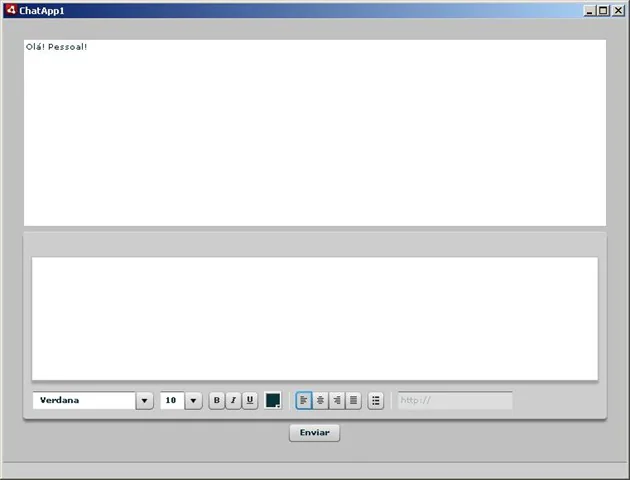
A historical messaging tutorial with Adobe Flex and BlazeDS; part of the original source code was missing from the WordPress export.
Read articleA historical selection of lighthearted videos about Adobe Flex and AIR, originally published in April 2008.
Read articleA catalog of Rodrigo Fraga's technical contributions to the Brazilian Adobe Flex community through March 2008.
Read articlePart two: Spring-managed services, a BlazeDS bean factory, declarative transactions, and Hibernate persistence.
Read articlePart one of a historical open-source web architecture tutorial using Adobe Flex, BlazeDS, Spring Framework, and Hibernate.
Read articleThe 2008 announcement of FlexBrasil, a phpBB forum created for beginners and professionals in the Adobe Flex community.
Read articleA short 2008 recommendation of a comedy video discovered on the former AtomFilms service.
Read articleA layered contact-form example using Flex, PHP, Zend Framework, and AMFPHP with explicit data-transfer objects.
Read articleA lighthearted 2007 record of returning to Counter-Strike after two years away from the game.
Read articleA historical tutorial on creating, applying, and visually editing CSS styles in Adobe Flex Builder 3 projects.
Read articleA 2007 announcement of an experimental area for web prototypes and projects; the original addresses are no longer available.
Read articleA record of Adobe's 25th anniversary in 2007 and the history video and timeline published by the company.
Read articleHistorical references and 2007 recommendations for code conventions in Adobe Flex and ActionScript projects.
Read articleA 2007 observation about the optional Google Toolbar offer in the Adobe Flash Player installer for Windows.
Read articleHow large Adobe Flex applications used on-demand modules configured and loaded through Flex Builder 3.
Read articleA historical file-upload example in Adobe Flex using FileReference, with server-side destinations in PHP and Java.
Read articleA 2007 record of configuring syntax highlighting in WordPress 2.3.1 with the iG:Syntax Hiliter plugin.
Read articleThe short welcome message that marked the launch of this version of the blog in December 2007.
Read articleThe announcement of FlexCenso, an initiative created to map the Adobe Flex developer community and job market in Brazil.
Read articleA curiosity found in 2007 while searching Google for unusual number sequences and comparing the results it returned.
Read articleHistorical arguments, originally written in 2007, for adopting Adobe Flex 2 in rich web applications for the enterprise.
Read article